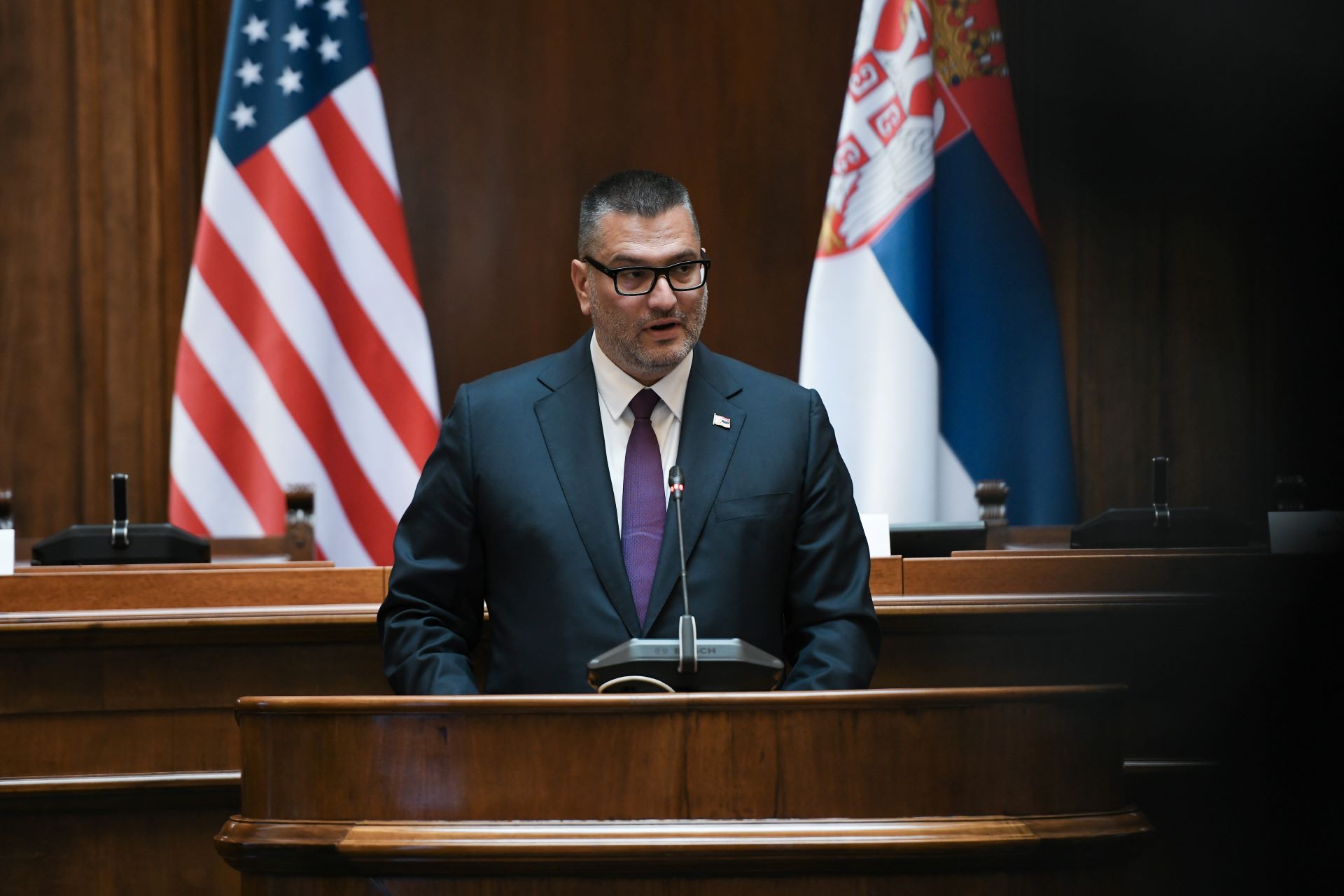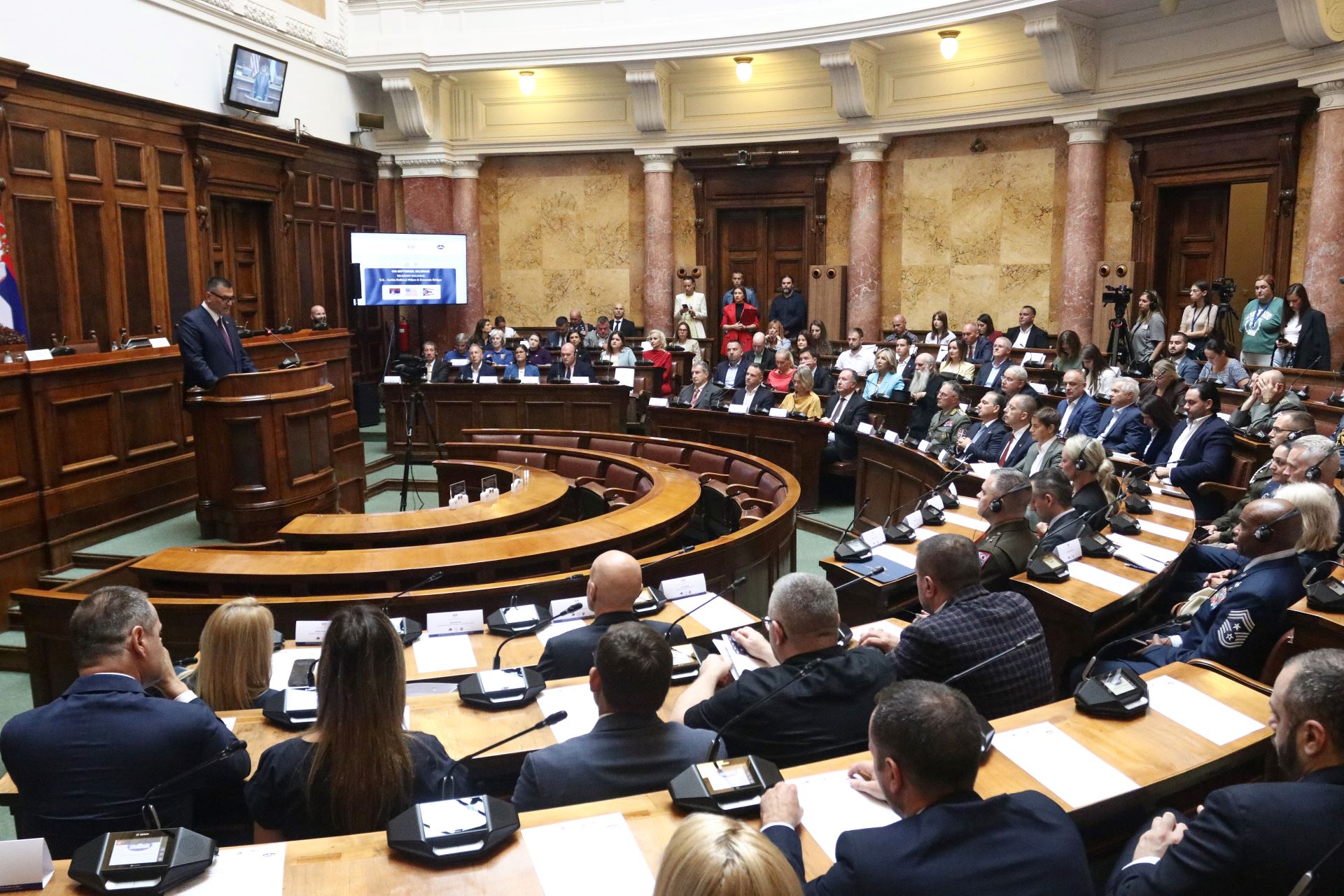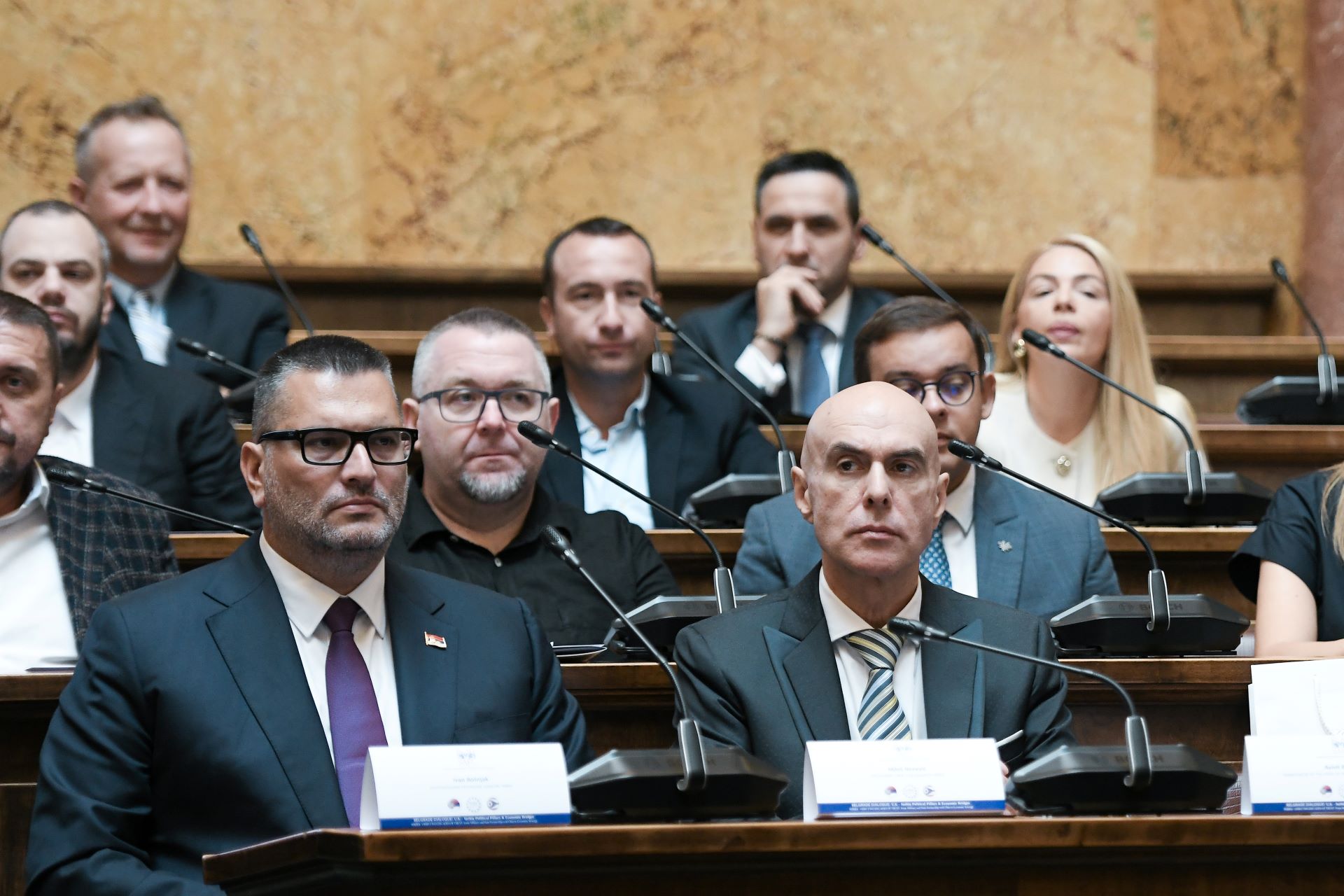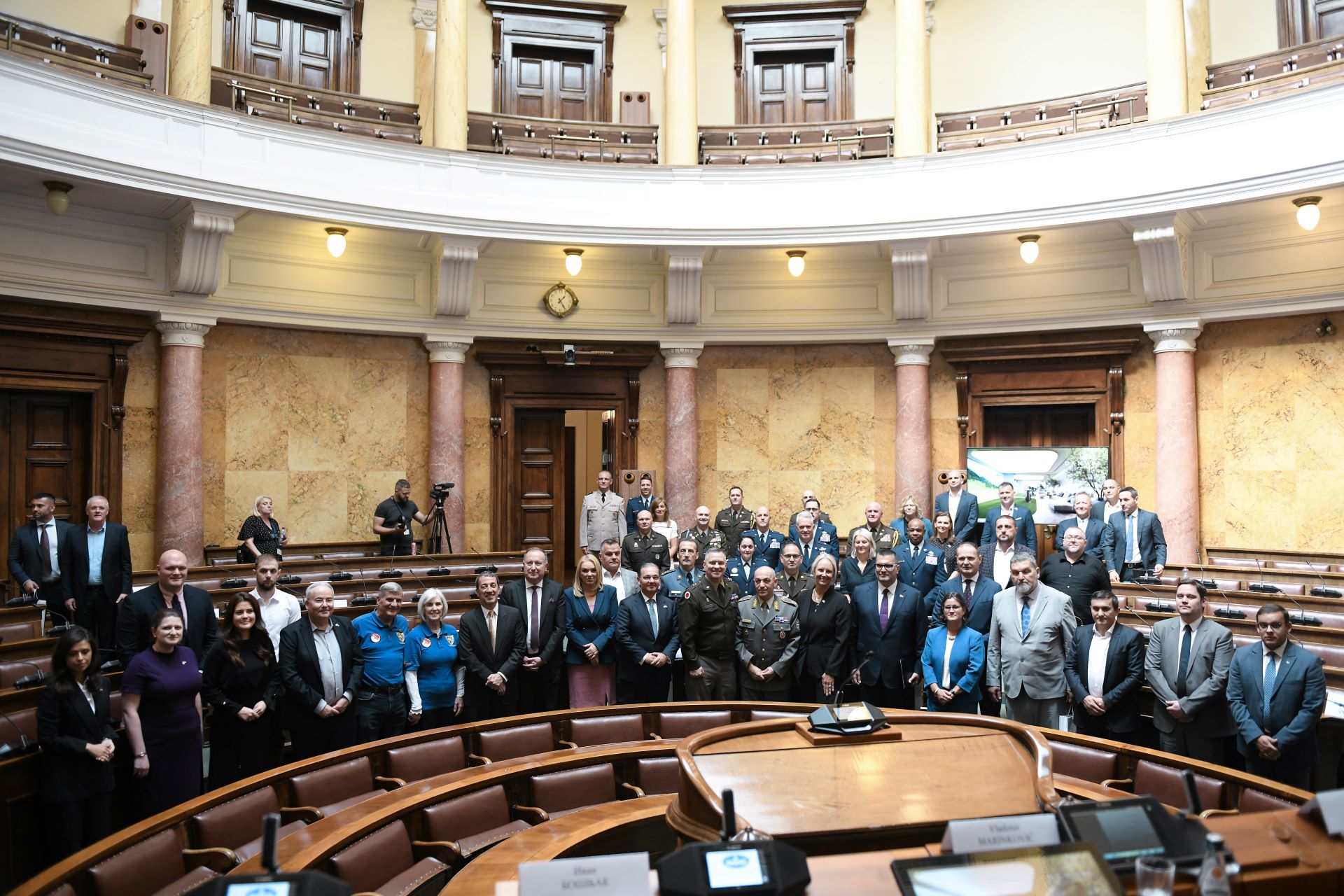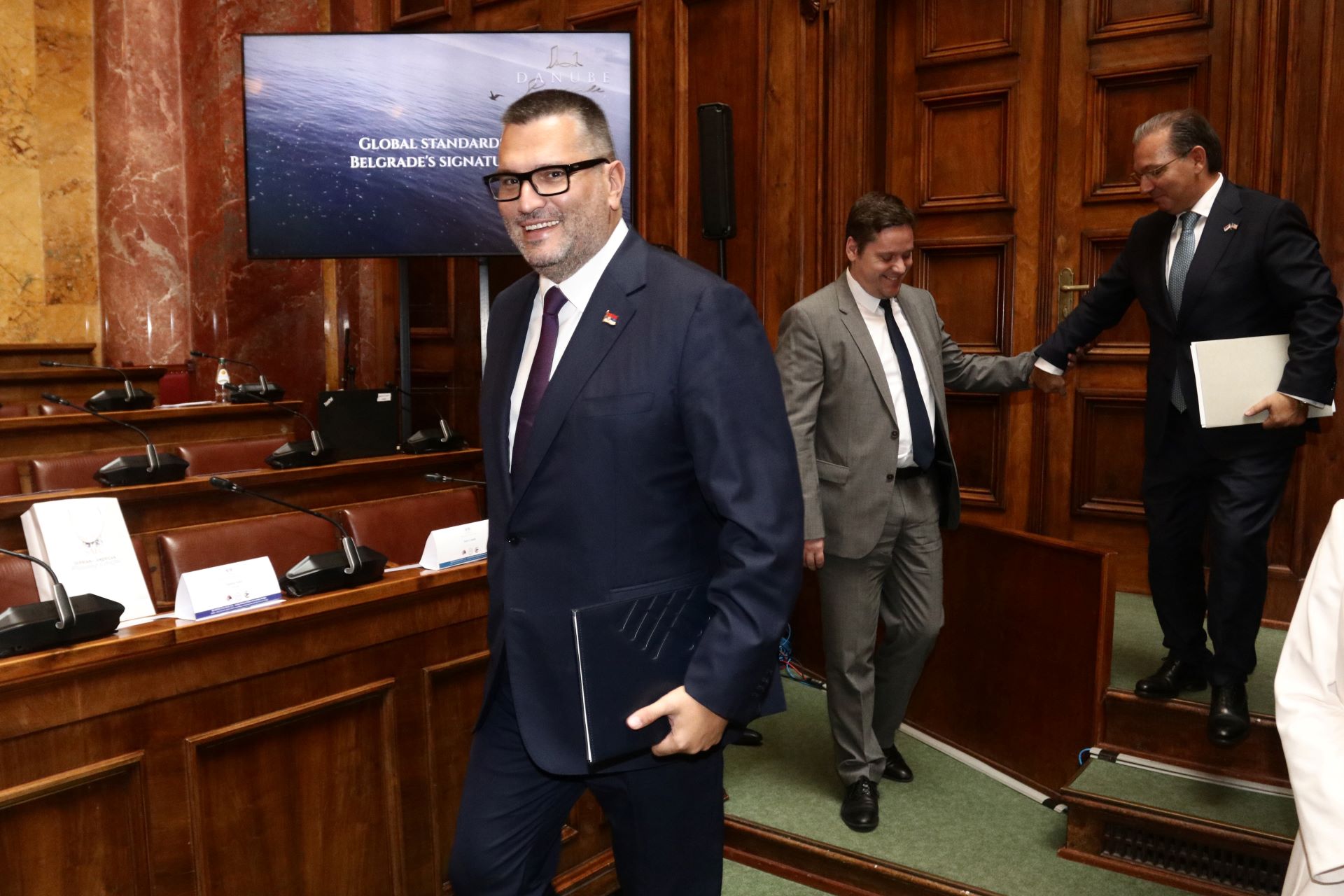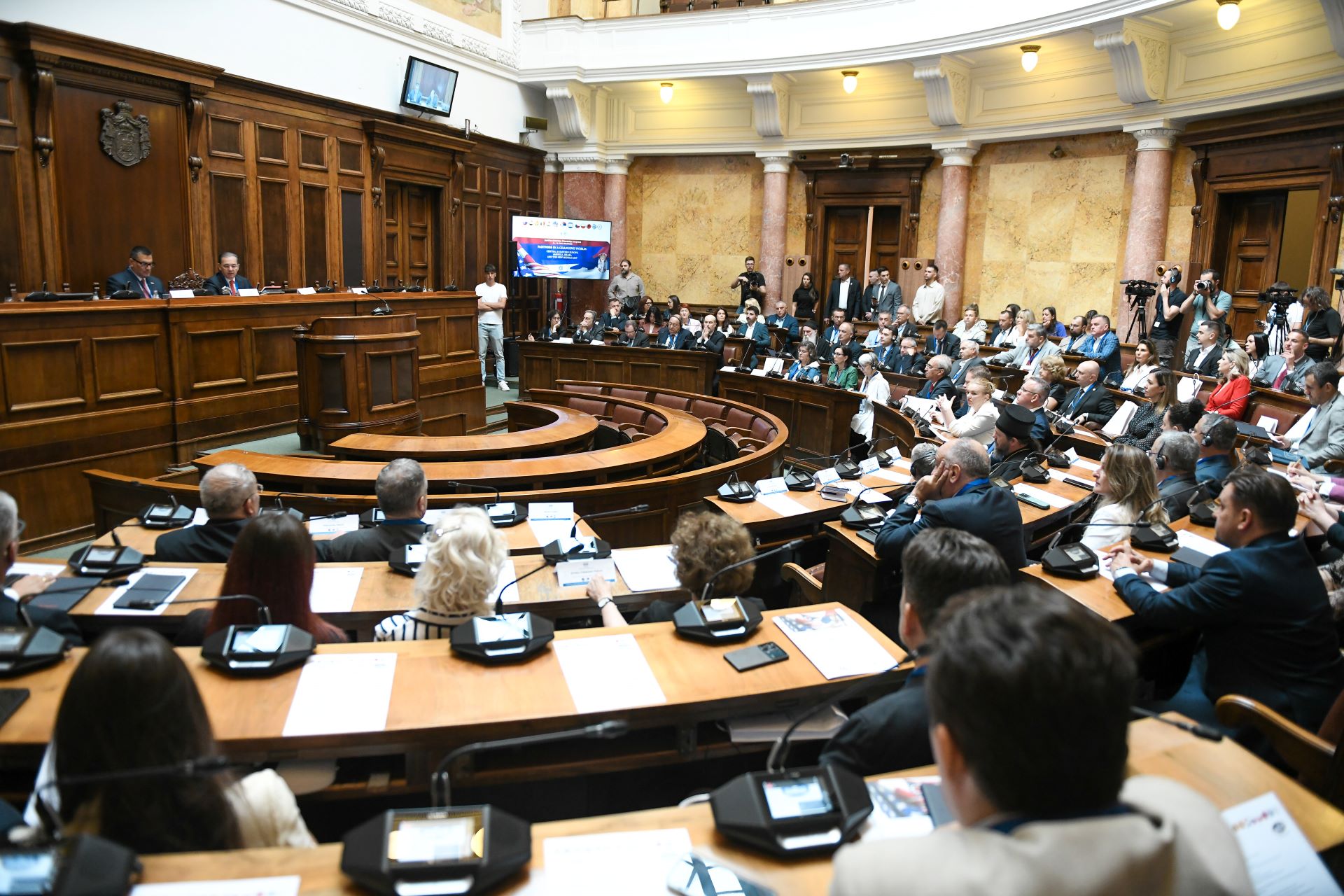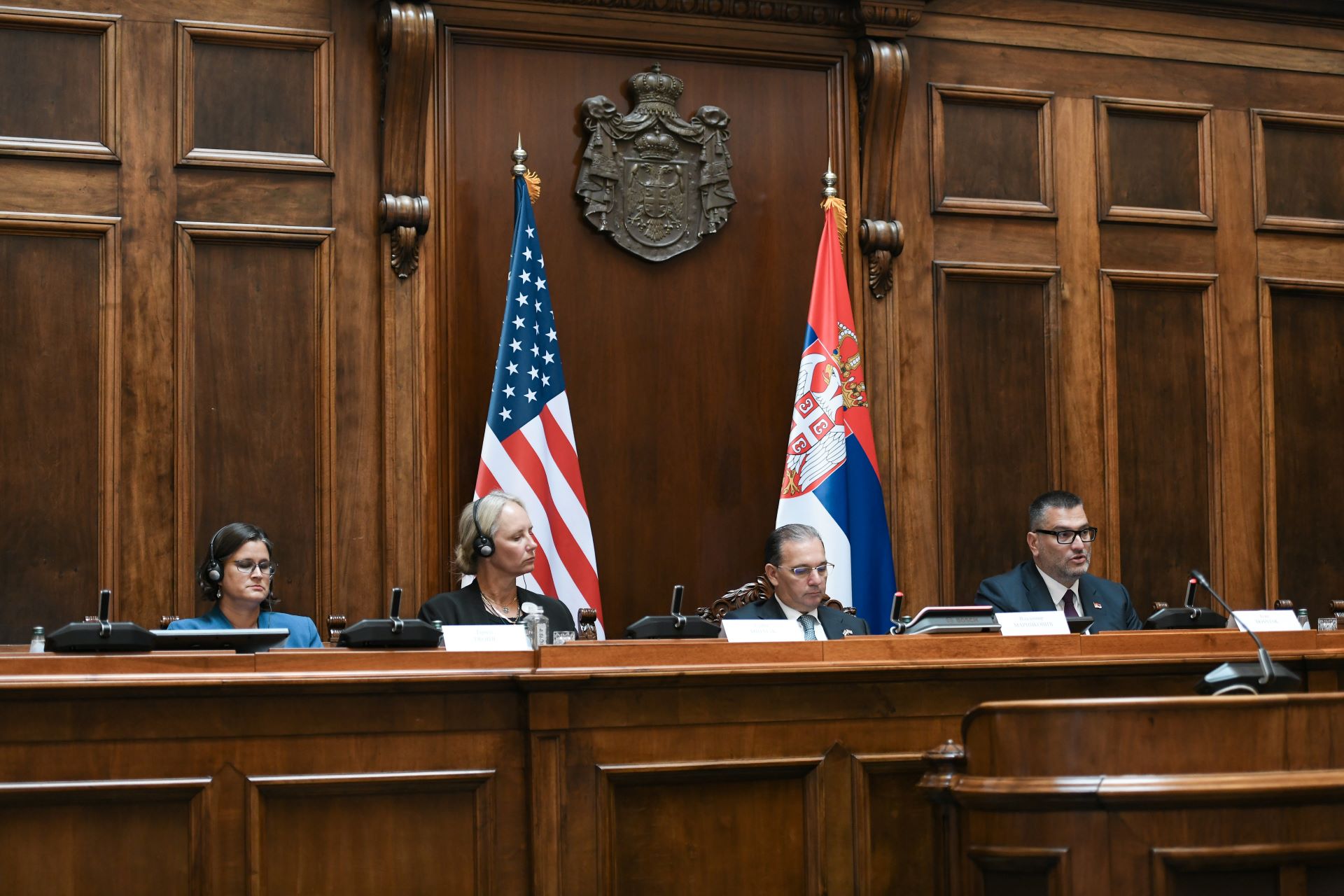
“Economic cooperation between the United States and Serbia is already exceptional, and the strategic dialogue between our two countries, launched two months ago in Washington, will provide an even stronger framework for it,” said Ivan Bošnjak, Deputy General Manager of Millennium Team and Vice President of the Serbian Chamber of Commerce and Industry, at the international America Day in Belgrade conference held at the National Assembly of the Republic of Serbia. This year’s conference was held under the theme “Belgrade Dialogue: Political Pillars and Economic Bridges between the U.S. and Serbia.”
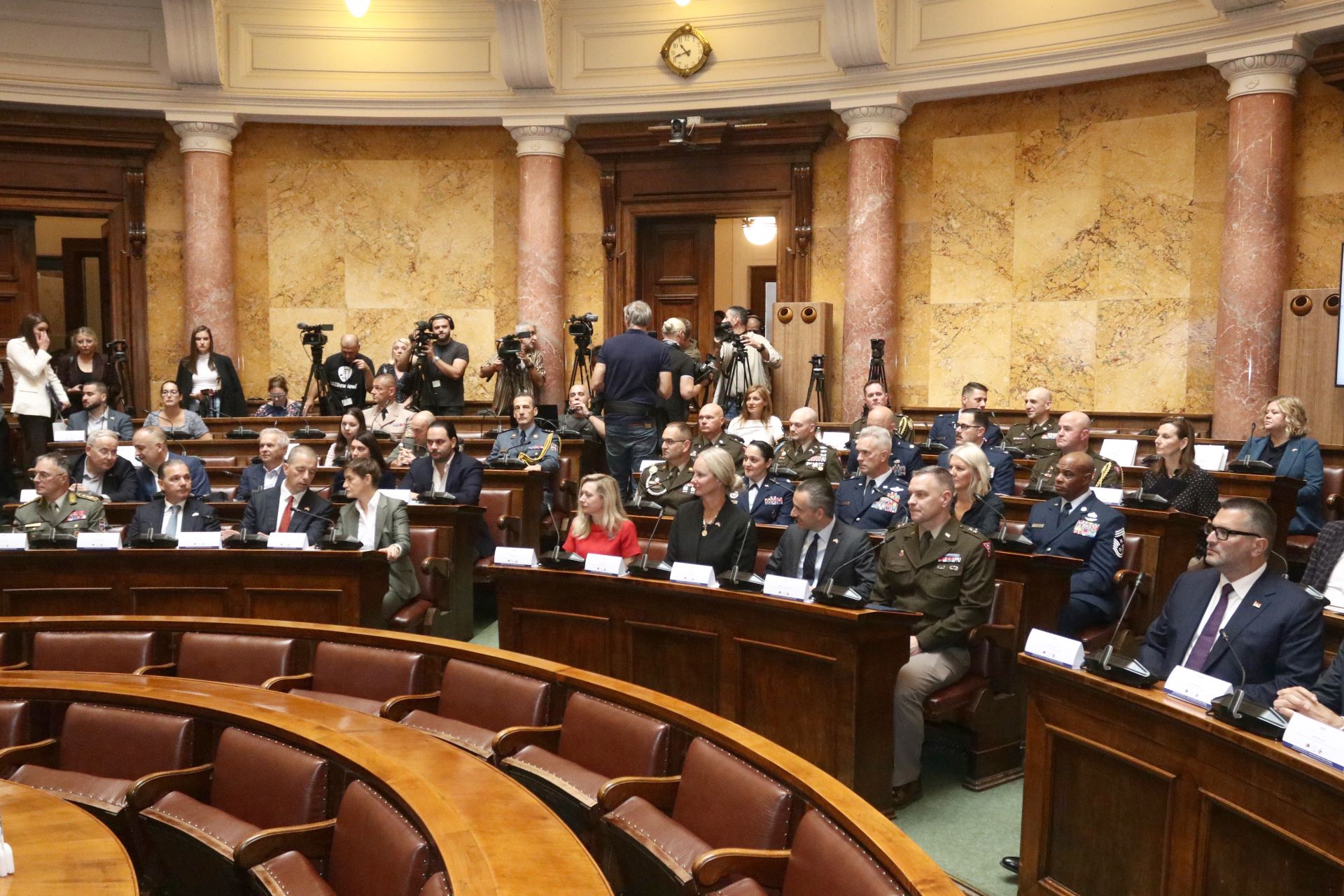
Organized by the Congress of Serbian-American Friendship, the conference brought together representatives of Serbian and U.S. political, diplomatic, business, and military circles. Particular emphasis was placed on the 20th anniversary of the signing of the agreement between the Republic of Serbia and the State of Ohio. An important part of this partnership is the cooperation between the Serbian Armed Forces and the Ohio National Guard, whose representatives attended the event at the National Assembly.
Bošnjak noted that 635 business entities majority-owned by U.S. investors currently operate in Serbia, with total investments of approximately USD 4 billion and more than 22,000 employees.
“U.S. companies are already an important part of the Serbian economy. The question now is how we can take this relationship to an even higher level. This is where I see the greatest value of the strategic dialogue between our two countries. It gives us an opportunity to move beyond traditionally important issues toward even more intensive cooperation in energy, infrastructure, high technology, digitalization, industry, tourism, and other areas where there is scope for shared interests,” Bošnjak said.
He also pointed out that, in the first quarter of this year alone, as much as 61% of Serbia’s total services exports were destined for the U.S. market:
“Trade in goods reached USD 1.6 billion in 2025, while trade in services amounted to almost USD 2.9 billion, an increase of 17.9% compared with 2024. Between 2017 and 2025, trade in services increased more than fivefold – from USD 526 million to USD 2.857 billion annually.”
In the structure of Serbia’s services exports to the U.S., he added, telecommunications, computer, and information services account for 60.2%, followed by business services at 27%, tourism at 4%, and transport at 3.4%.
“Serbia is no longer simply a market where U.S. companies come to sell their products. We have companies and professionals providing services that are competitive in the U.S. market,” Bošnjak said, announcing that particular emphasis in the coming period would be placed on connecting U.S. companies with Serbian small and medium-sized enterprises through more meetings, business conferences, and exchanges of information on investment opportunities.
He identified predictability as another key prerequisite – a stable regulatory framework and readily available infrastructure – noting that Serbia currently attracts more than 60% of all foreign direct investment flowing into the region.
Bošnjak devoted a separate part of his address to tourism and hospitality, an area in which Millennium Team Group has extensive business experience.
“Our company has signed an agreement with Marriott International, our partner on two Millennium Team Group projects. The first is in Vranjska Banja, where we will have the Westin and Kralj Petar I by Autograph Collection hotels – the brand’s largest investment in the region. The second is Danube Riverside in Belgrade, a EUR 500 million development that will feature the first Ritz-Carlton hotel in this part of Europe. In my view, this is the best model for developing economic relations between Serbia and the U.S. – not a single investment, but a long-term partnership that creates opportunities for new projects,” Bošnjak said, adding that he also sees the International Specialized Expo 2027 in Belgrade as a major opportunity for further cooperation.
The conference was held just two months after Serbia and the United States launched their first Strategic Dialogue in Washington, led by U.S. Secretary of State Marco Rubio and Serbian Foreign Minister Marko Đurić. The dialogue established an institutional framework for cooperation in energy, investment, trade, technology, science, and education. During the first round, a Memorandum on Energy Infrastructure and Regional Security and a Memorandum on the Fulbright Program were signed, while Serbia also joined the Artemis Accords.
“Just two months ago, the Republic of Serbia and the United States launched their first Strategic Dialogue in Washington. This established a new institutional framework for cooperation between the two countries in areas of major importance to the business community as well – from energy and investment to trade, new technologies, science, and education. For me, both as a businessman and as Vice President of the Serbian Chamber of Commerce and Industry, it is particularly important that this new political framework is already acquiring a strong economic dimension. The best relations between countries are those that create opportunities for people and companies – for new contacts, investment, the exchange of knowledge, technology and experience, as well as joint projects,” Bošnjak said.
Bošnjak addressed the participants at both the opening and closing of the conference and also took part in a panel discussion alongside Tipten Trojdl, Economic Attaché at the U.S. Embassy in Belgrade, and Lidija Mihalik, Director of the Ohio Department of Development. The panelists agreed that predictability is one of the most important factors for investors when planning the development of their businesses.
Other conference participants included Ana Brnabić, President of the National Assembly of the Republic of Serbia; Marko Đurić, Minister of Foreign Affairs; Alexander Titolo, Chargé d’Affaires at the U.S. Embassy in Belgrade; Matthew Woodruff, Commander of the Ohio National Guard; and Vladimir Marinković, President of the Congress of Serbian-American Friendship.